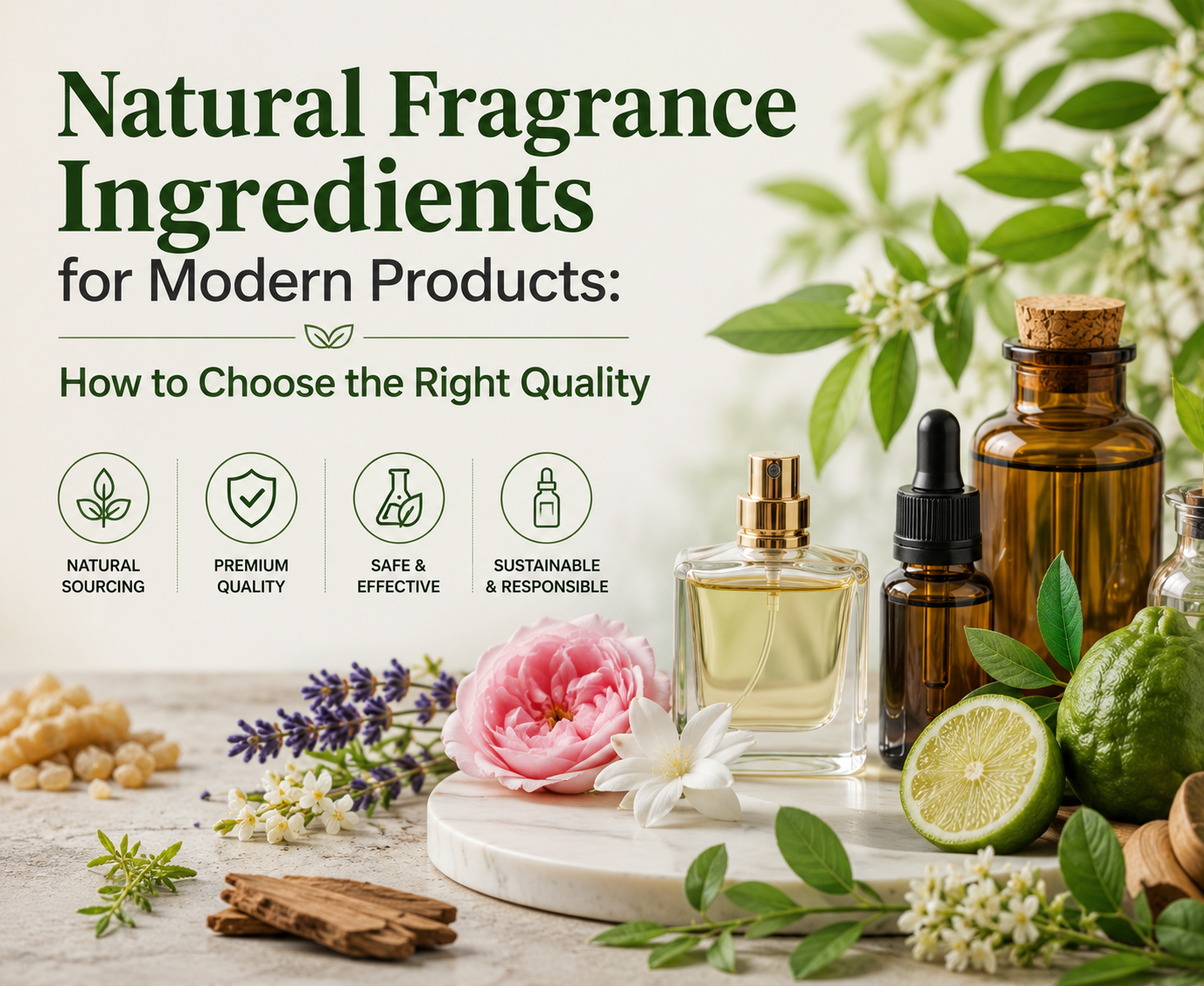
People have gotten pickier about what's actually in the products they buy. A fragrance that smells "fresh" isn't enough anymore buyers want to know what's behind that freshness. Same with personal care items and household products; performance still matters, but so does the sensory experience, and increasingly so does the ingredient list. That shift has opened up real ground for businesses working with essential oils and aromatic materials.
For a manufacturer, picking a raw material was never really just about price. Quality, batch consistency, how the aroma actually reads, how it behaves in different applications, where it comes from, whether supply holds up under demand all of it feeds into the final product. Cosmetics, perfumes, soaps, candles, wellness lines, home care the ingredients chosen at the start end up shaping everything downstream.
Aromatic Chemicals Manufacturers supply the fragrance, cosmetic, personal care, soap, detergent, and household industries with the raw materials these sectors depend on. These ingredients give formulators room to build specific scent profiles, sharpen sensory qualities, and adjust a finished product until it actually works.
Fragrance trends move fast these days. Fewer people want the generic, catch-all scent; more people want something that feels specific to them. Fresh botanical notes, citrus, woody bases, clean-smelling blends that's where a lot of the demand is right now.
There's a branding side to this too. A signature scent can become part of how customers recognize a brand, sometimes without even realizing that's what's happening.
Still, none of that works without quality control. Even minor inconsistencies in purity can throw off a fragrance or wreck a formulation that took months to get right. So buyers need to be looking closely specs, batch-to-batch consistency, packaging, storage, and whether the supplier is actually reliable when it counts.
Eucalyptus Oil Manufacturers produce one of the more recognizable ingredients out there sharp, distinctive, and genuinely versatile. It shows up in personal care products, aromatherapy blends, soaps, cosmetics, fragrances, wellness products, and select household formulations.
Part of why it's stuck around is the strength of its scent profile. That freshness works well in products built around a clean, invigorating feel, which is exactly why brands looking for a clear botanical identity keep coming back to it.
It's also popular with companies leaning into natural, plant-based formulation and as clean beauty and botanical wellness keep influencing what people buy, ingredients with an obvious natural origin tend to have the edge.
For product developers, the real question is fit does this oil actually suit the application at hand? Quality and consistency affect the smell, the appearance, and how the finished formulation performs, so sourcing can't be an afterthought here.
Citronella Oil Ceylone Manufacturers work with businesses that want citronella oil with a genuinely distinct aromatic character for fragrance, personal care, soap, candle, household, and related applications. Its fresh, citrus-leaning profile makes it a solid pick wherever a bold botanical scent is the goal.
The rise of outdoor lifestyle products, along with more naturally-oriented home care lines, has pushed interest in citronella-based formulations even further. Candles, diffusers, soaps, and other everyday products can all work this ingredient in, depending on the formulation.
Origin matters more than it used to. Buyers building premium products increasingly want to know where an ingredient actually comes from which is good news for brands willing to be transparent about sourcing.
And as with any concentrated aromatic material, formulation and quality control aren't optional extras. Manufacturers need to evaluate the material against its intended use and make sure the finished product actually meets the relevant safety and quality standards.
Fragrance isn't confined to perfume counters anymore. Aromatic ingredients now turn up in skincare, haircare, candles, soaps, detergents, air care, massage products, wellness lines basically anywhere a scent adds value.
There's also a pull toward more personal fragrance experiences. Instead of picking from a handful of conventional scents, people are exploring botanical, fresh, woody, citrus, and herbal combinations that feel a bit more their own.
Clean, naturally-inspired beauty keeps growing too. People tend to gravitate toward products that feel simple and honest. That doesn't mean every "natural" ingredient is automatically better but it does explain why transparent sourcing and accurate labeling have become such a big deal.
For businesses, that's an opening pairing appealing fragrances with well-chosen ingredients and formulation that's actually thought through.
Start with the application, not the ingredient. What works in a candle won't necessarily hold up in a cosmetic or personal care formula, and vice versa.
From there, look at the specs consistency, packaging, storage conditions, how much supply a vendor can actually deliver, and their quality control practices. Communication matters just as much, especially once volume needs grow or requirements get more specific.
Price is a factor, sure, but it shouldn't be the deciding one. A cheap ingredient that causes formulation problems, or throws off consistency batch to batch, often ends up costing more than the reliable option would have in the first place.
Long-term supplier relationships tend to pay off as production scales. A dependable source makes planning easier and gives a brand room to grow new products, new markets without constantly worrying about supply.
Divisha Natural Flavours And Fragrances Exports works with businesses sourcing natural oils and aromatic ingredients for fragrance, cosmetic, personal care, wellness, and related applications. A quality-first approach helps manufacturers find ingredients that actually fit their requirements, while keeping up with where the market's heading.
The businesses that do well tend to understand their customers. Good packaging gets someone to try a product once. Consistent quality and a fragrance people remember are what bring them back.
Natural oils and aromatic ingredients are only going to matter more as consumer preferences keep shifting. Fresh botanical notes, recognizable ingredients, distinctive combinations, naturally-inspired concepts all of it is shaping product development across a wide range of industries right now.
The bigger opportunity belongs to businesses willing to move past the basic formulation and build something with actual identity. Understanding what each ingredient brings to the table is what makes that possible.
In the end, the "right" ingredient is just the one that fits the product, the formulation, what consumers expect, and the quality bar that has to be met. Focus on sourcing that holds up and formulation that's actually thought through, and the rest tends to follow.