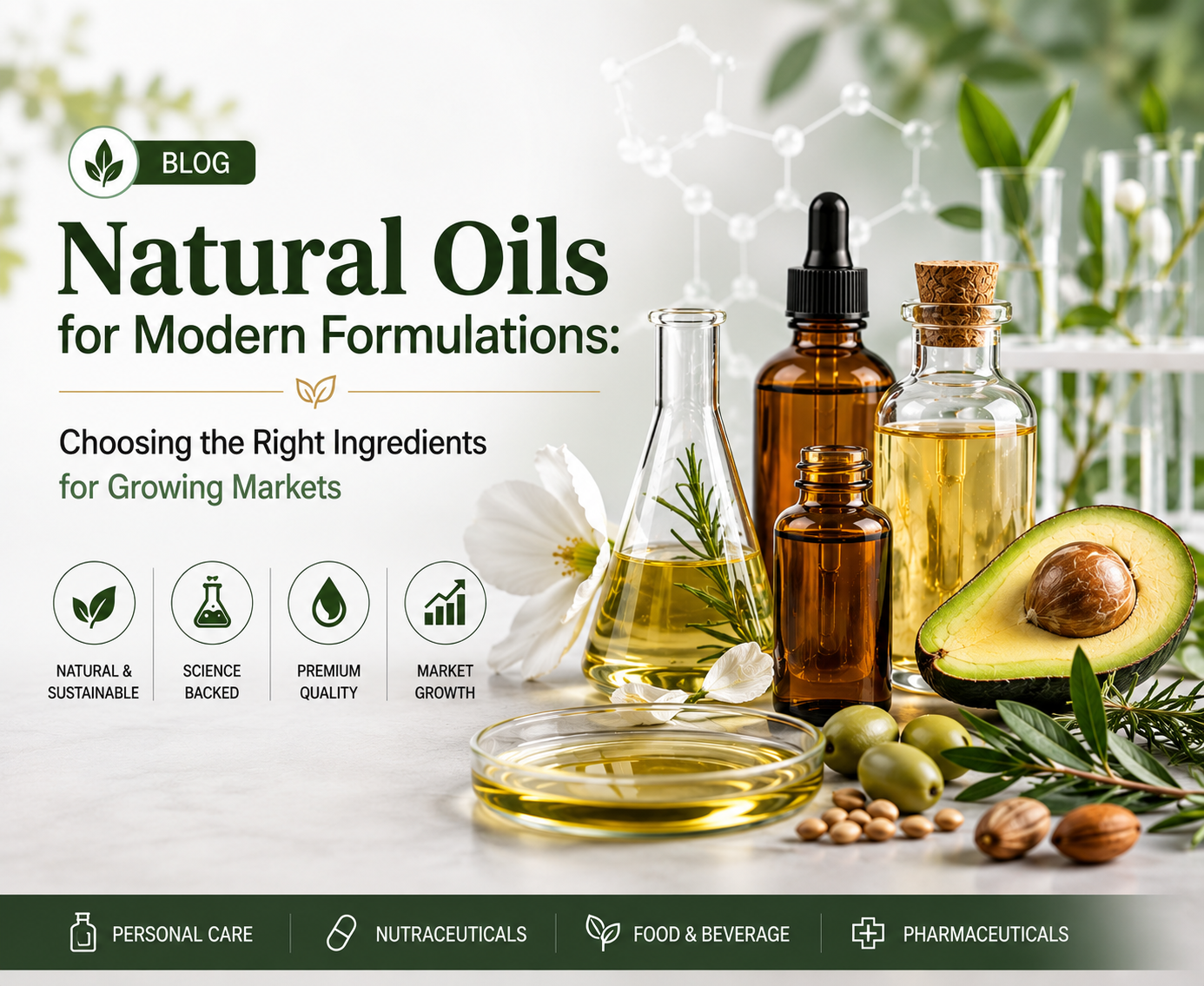
Walk into any skincare or wellness aisle today and you'll notice something has shifted. Buyers aren't just grabbing whatever looks good on the shelf anymore. They flip the bottle over. They read the ingredient list. They want to know where something came from before they trust it on their skin or in their home.
That change matters for anyone manufacturing botanical or naturally derived ingredients, because it's not just a marketing angle anymore. It's a purchasing habit. And it cuts both ways: brands are getting choosier about what they buy too, since one weak raw material can quietly undo months of formulation work how a product performs, how it smells, even whether it sells at all.
Three oils in particular keep coming up in conversations with formulators right now, each for its own reason: pine oil, safflower oil, and flax seed oil. They don't overlap much in use case, which is part of why they're worth looking at separately.
Pine oil has been around the formulation world long enough that most people don't think twice about where that "clean" smell in a floor cleaner comes from. Pine Oil Manufacturers have kept it relevant across disinfectants, air fresheners, soaps, fragrance blends, and a fair amount of industrial work, largely because nothing else quite replicates that sharp, familiar scent.
Home care has leaned into this lately. Nobody wants a cleaning product that just smells like chemicals people want something that feels effective and pleasant to use, and pine oil tends to check both boxes at once.
What makes it useful from a business standpoint is flexibility. The same core ingredient can move between a soap bar, an industrial degreaser, and a fragrance blend depending on how it's processed and blended which isn't something every raw material can claim.
None of that works, though, if the sourcing is shaky. Aroma consistency in particular can drift between batches if a supplier isn't careful, and that's the kind of thing that shows up in customer complaints six months later, not on day one. Worth checking a supplier's track record before their price tag.
Safflower Oil Manufacturers are riding a wave that's been building for a while now plant-derived oils in cosmetics and personal care aren't a niche anymore. Safflower oil in particular gets picked for its light, almost weightless feel on skin, which is exactly what a lot of modern skincare formulas are chasing.
Clean beauty gets a lot of the credit here. Shoppers want ingredient lists they can actually read without a chemistry degree, and safflower oil fits that expectation while still performing well in a formula it's not a compromise ingredient.
You'll see it turn up in body lotions, hair treatments, massage oils, and general skincare, which says something about how adaptable it is. A single supplier relationship can support several product lines at once, which brands developing a wider range obviously appreciate.
There's a second trend feeding into this too: personalization. Nobody's skin is the same, climates differ, routines differ, and brands know it. So instead of one formula for everyone, they're building smaller, more targeted product ranges and a flexible oil like safflower makes that kind of segmentation easier to pull off without reinventing the wheel each time.
Flax Seed Oil Manufacturers sit at an interesting intersection wellness, nutrition, and cosmetics all want a piece of this ingredient, and for slightly different reasons. Its natural composition has made it something of a go-to for brands leaning into a plant-focused identity.
Part of this is just wellness culture bleeding into everything. People aren't only asking "does this work" anymore they're asking whether a product fits into how they want to live, generally. Balanced, natural, deliberate. Flax seed oil slots into that story pretty comfortably.
On the formulation side, it shows up mostly in skin and hair care, where a plant-derived oil carries real weight with the target customer especially paired with sourcing information the brand is actually willing to share, rather than vague natural claims.
There's also something simpler going on: people like recognizing what's in their products. Nobody wants to Google an ingredient name before they buy something. Flax seed oil, by contrast, is a name people already trust which takes a lot of the marketing lift off a brand's shoulders.
Picking a supplier on price alone is how a lot of formulation problems start. It's worth digging into how consistent their product is batch to batch, how they handle quality control, where the raw material actually comes from, and how it's processed and stored before it reaches you.
Consistency matters more than people expect, especially at scale. A formula tested and approved with one batch can behave differently with the next if the supplier's specifications drift even slightly and that's a hard thing to catch until it's already a problem in production.
Documentation helps here too, more than it gets credit for. Formulation teams work better with clear specs in hand, and suppliers who communicate well tend to prevent the kind of last-minute scrambling that damages a relationship over time.
Then there's adaptability, which is easy to overlook until you actually need it. Markets shift fast a brand might need a different packaging format or a smaller batch size next quarter than they needed this one. Suppliers who can bend with that are worth more than the ones who quote the best price and nothing else.
"Natural" gets used loosely. It doesn't automatically mean well-sourced, properly processed, or stored correctly and skipping those steps is exactly how inconsistent formulations, customer complaints, and production headaches creep in later.
Manufacturers who take quality seriously tend to understand something simple: their reputation is only as strong as the weakest ingredient in their product. That's really the whole case for working with a dependable ingredient partner rather than the cheapest one available.
Divisha Natural Flavours And Fragrances Exports supplies natural oils and aromatic ingredients to businesses working across cosmetic, personal care, fragrance, wellness, and industrial applications, with a focus on staying consistent and meeting what customers actually need not just what looks good on a spec sheet.
Clean beauty isn't fading, but it's no longer the only thing shaping this industry. Sustainability, ingredient transparency, and botanical sourcing are all pulling weight now too, alongside a growing preference for ingredients that can do more than one job.
Personalization keeps showing up as a theme, and for good reason brands are building narrower, more specific product lines instead of one formula meant to fit everyone. That shift is exactly why versatile raw materials matter more than they used to.
Wellness, meanwhile, has stopped being an occasional purchase and become something closer to a daily habit. Skincare, hair care, home fragrance, aromatherapy it's all folding into a broader idea of everyday comfort, and botanical oils happen to sit right in the middle of that.
The businesses that do well here aren't necessarily the ones chasing every trend as it appears. They're the ones paying attention to what customers actually value and building around that quality, honesty about sourcing, and ingredients that genuinely do what they claim.
There's real opportunity in this market for businesses willing to take quality seriously. Pine oil earns its place in fragrance and home care. Safflower and flax seed oil open doors across beauty, personal care, and wellness. Different oils, different jobs but the same underlying principle applies to all three.
Everything comes back to the raw material. Get that right consistent quality, sourcing you can actually stand behind, careful formulation and the rest tends to follow: products people trust enough to buy again.
The companies that last in this space are the ones treating good ingredients and thoughtful development as two halves of the same job, not separate concerns. Natural oils aren't a passing moment in this industry. They're becoming part of how brands earn trust, one formula at a time.
Success in the natural products space isn't really about who innovates fastest it's about who gets the ingredients right, consistently, over time. Businesses investing in genuinely high-quality botanical oils are the ones best positioned to meet what customers are asking for now: transparency, sustainability, real performance. As demand for clean, plant-based formulations keeps climbing, sourcing stops being a background detail and becomes the thing that actually determines whether a brand holds up. The companies that stay disciplined about consistency and quality won't just build better products they'll build the kind of trust that keeps customers coming back in a market that isn't getting any less competitive.